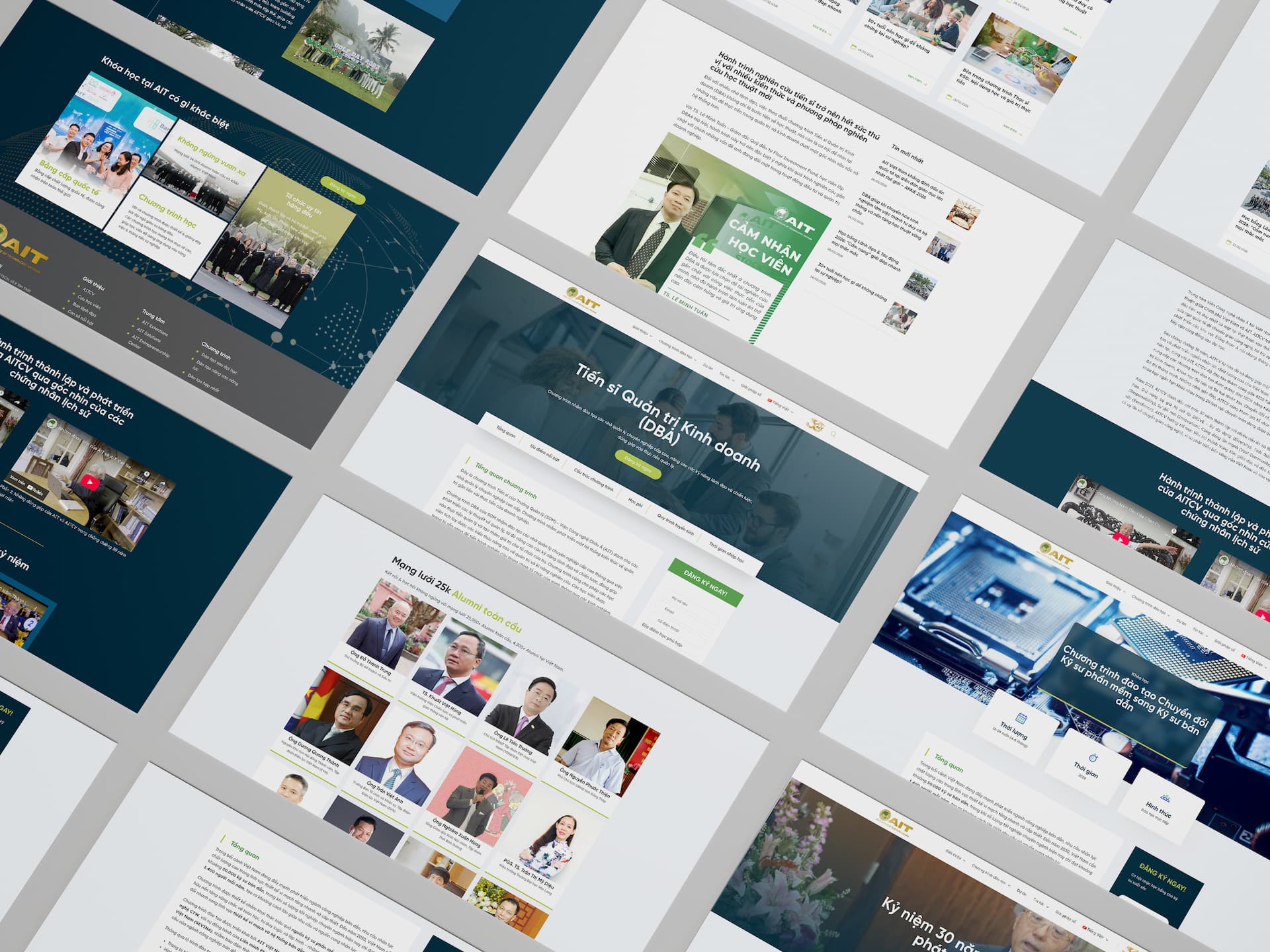
AIT Vietnam — From Legacy Pages to a Bilingual Academic Platform
AIT Vietnam is an international postgraduate institution with a high volume of program updates and a broad alumni/faculty network. The legacy Elementor website did not support that operating reality: pages were heavy, updates were slow, and content changes required technical support for routine tasks. Our objective was to deliver a platform that represented institutional credibility while allowing non-technical teams to manage content independently.
1. Problems
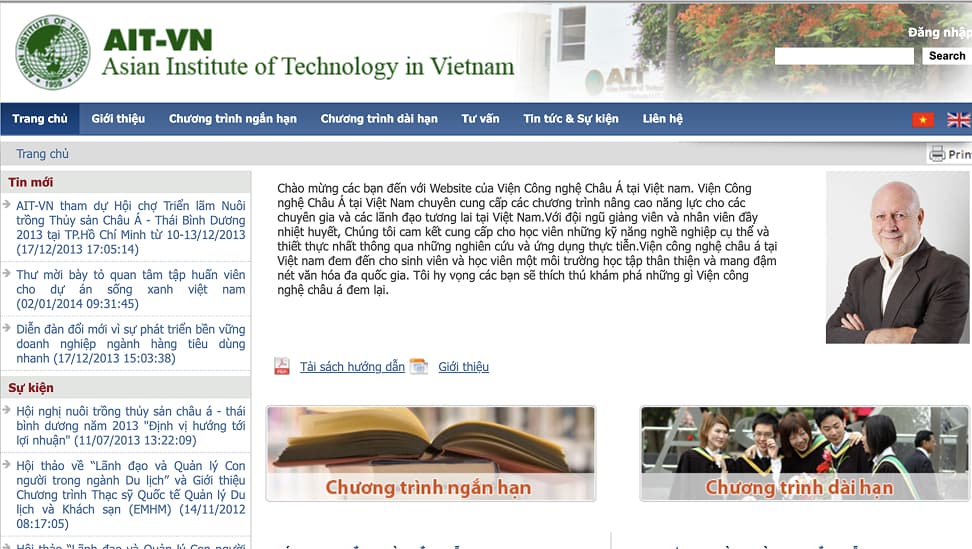
The website faced two core issues: performance and operations. Pages often loaded in over five seconds, and the interface felt crowded for an institution that needed a clean, credible academic presence. While the visual gap was clear, the operational gap was more damaging.
Course publishing depended on developer availability, which slowed admissions updates. The marketing team handled frequent semester changes, but each update required technical support and layout QA. As update volume grew, delays and coordination costs increased.
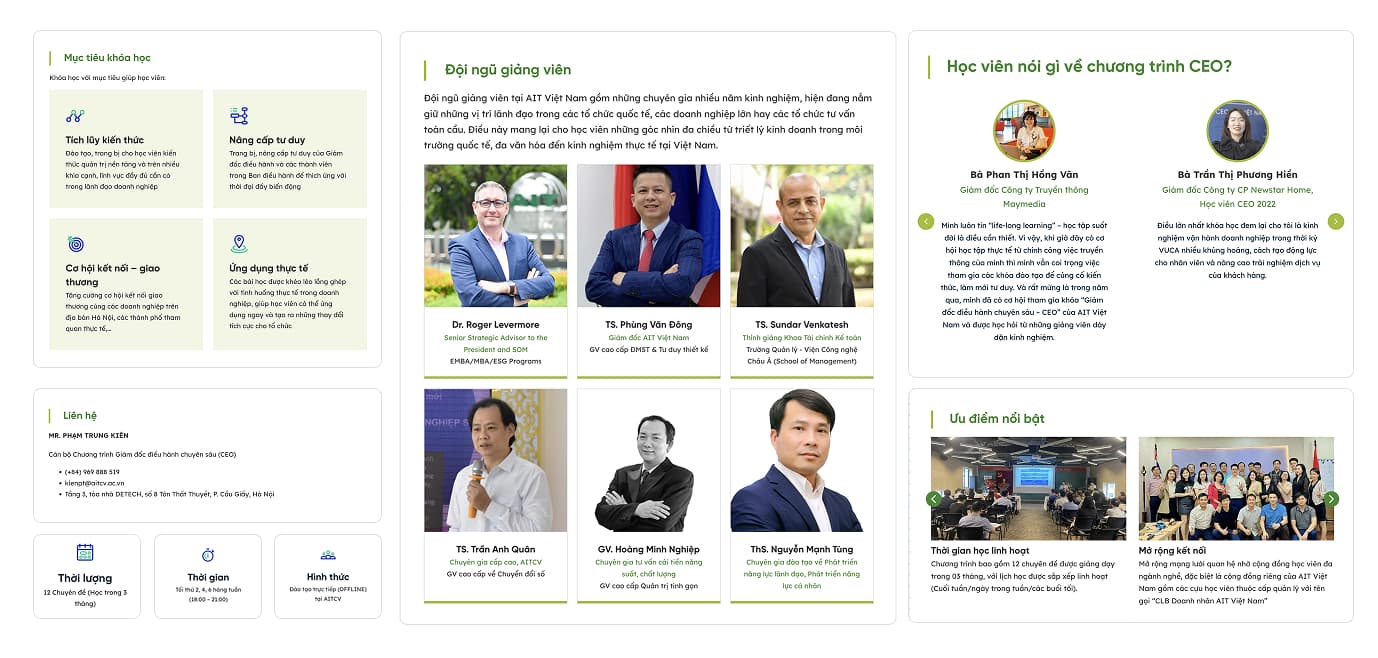
The faculty and alumni section had the same pattern. Static-page editing made bulk profile updates difficult, so content became outdated. Over time, this weakened a section that should have reinforced trust and social proof.
2. Approach
We structured the project around one principle: editorial independence without sacrificing brand quality. From discovery onward, we treated content operations as a product requirement, not a post-launch training topic. This changed both design decisions and system architecture.
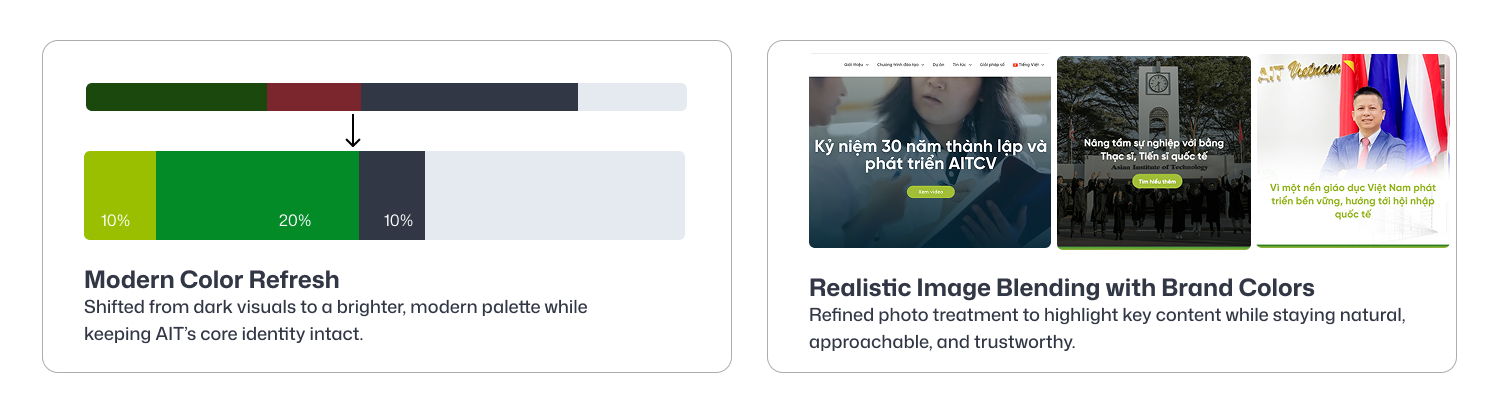
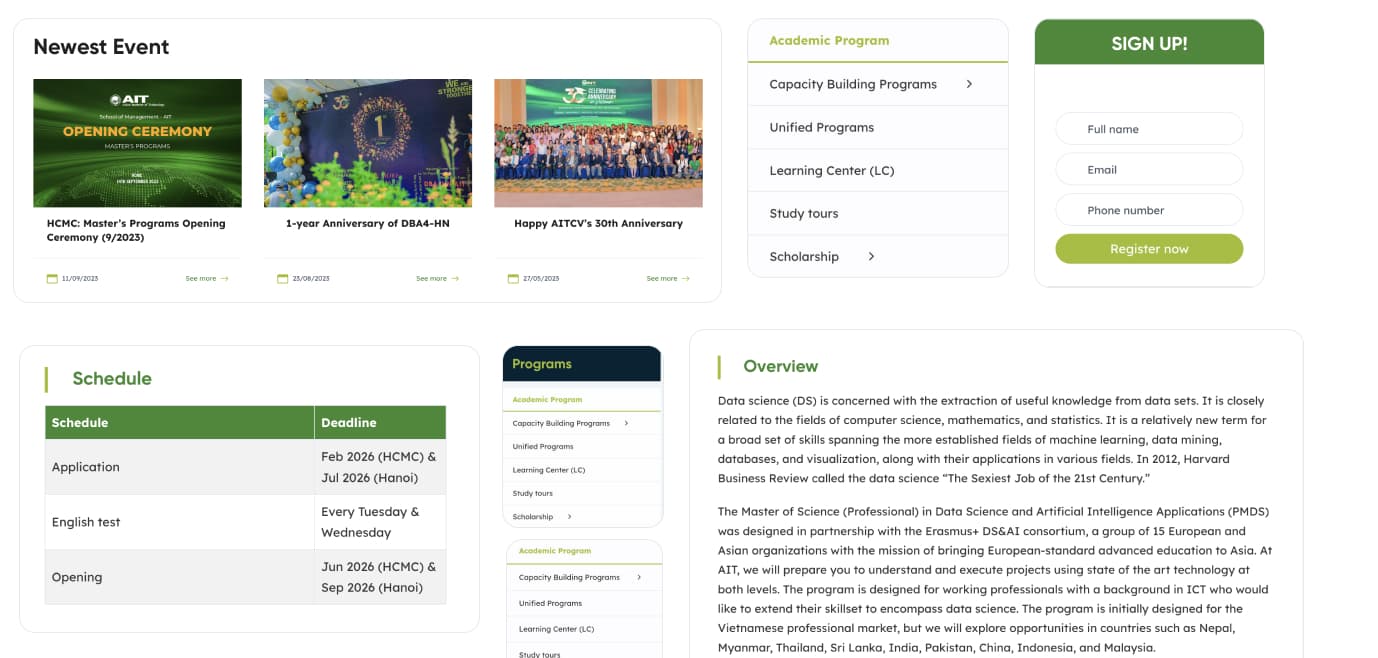
At the design level, we shifted toward a cleaner visual system with restrained color usage, stronger spacing rhythm, and clearer typography hierarchy. The goal was not aesthetic minimalism alone, but faster comprehension and stronger institutional trust at first glance. Every layout decision was tested against real content scenarios, especially course and admissions pages.
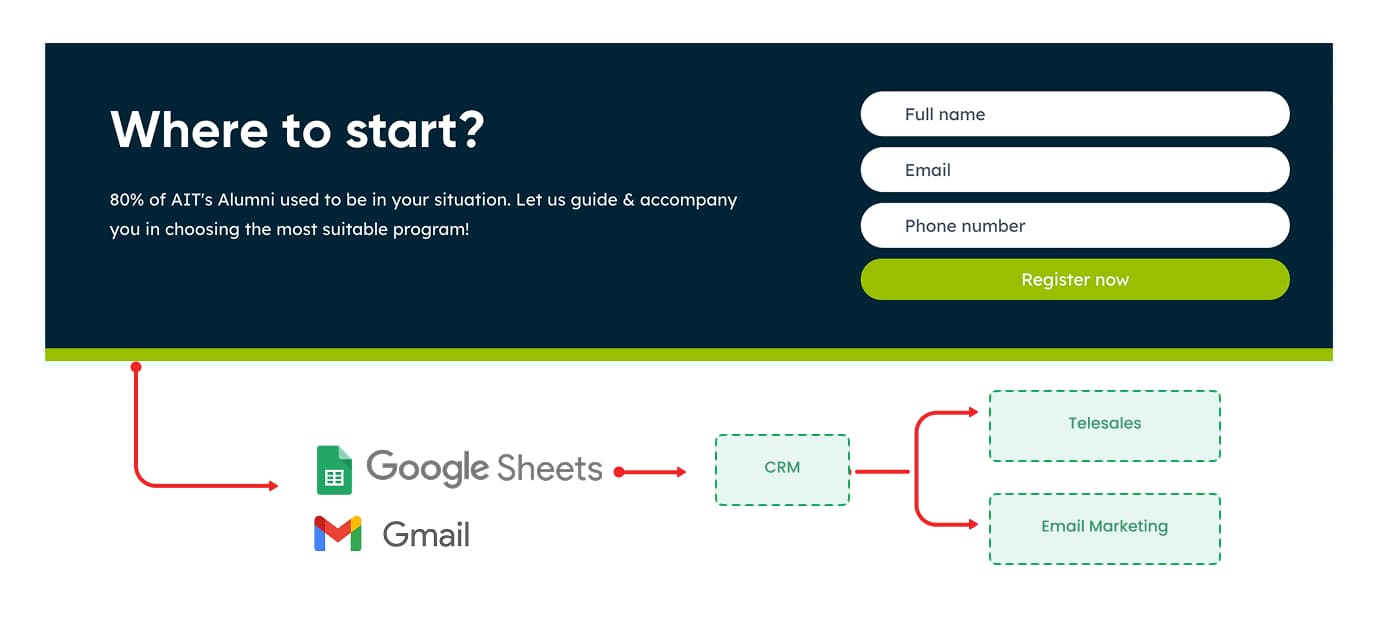
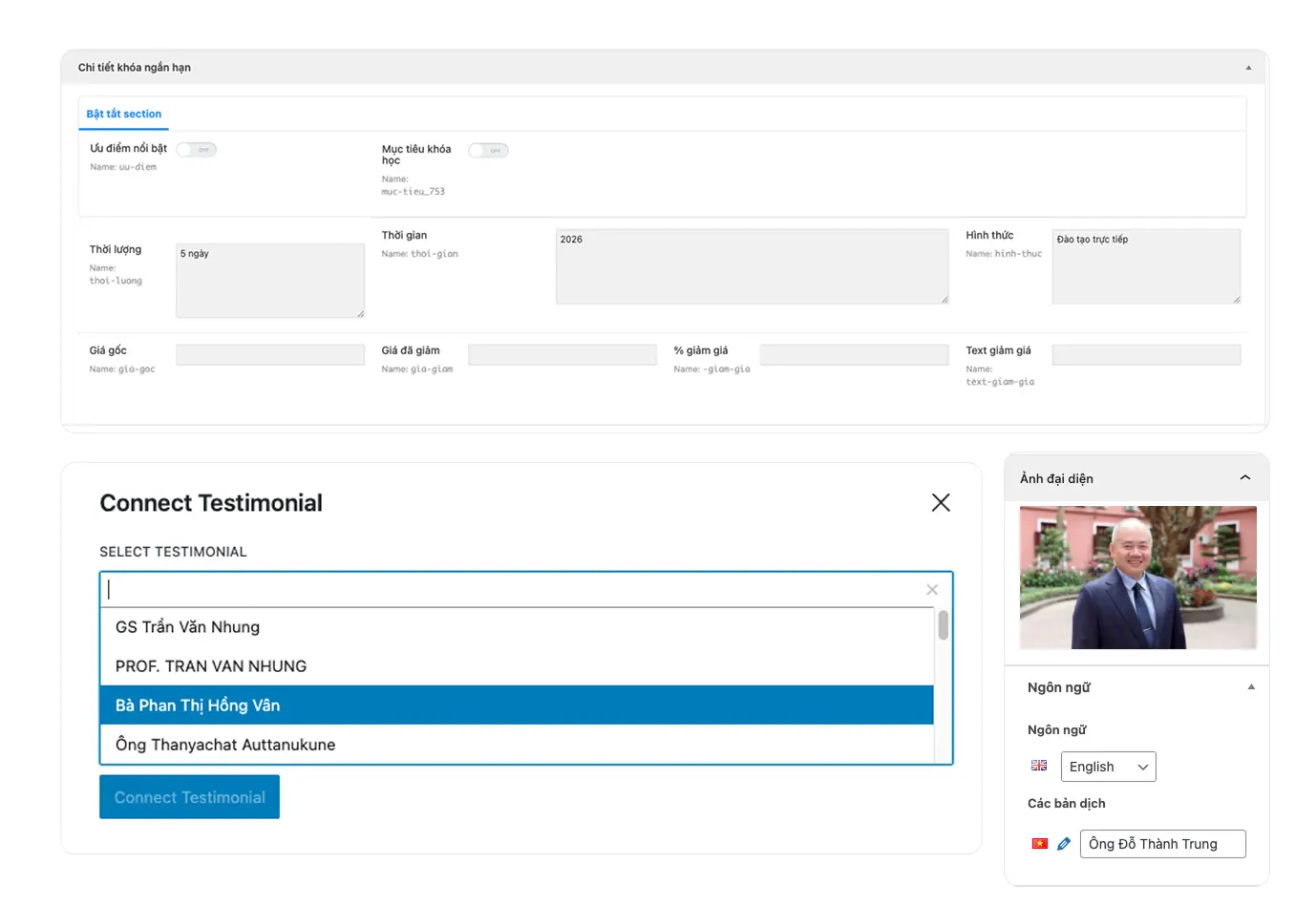
At the system level, we built structured content flows for courses, faculty, and alumni data, then connected key workflows to Google Sheets and form automation. We implemented bilingual architecture with consistent VI/EN content mapping so teams could maintain both languages in one operating model. This reduced duplication risk and improved publishing consistency.
3. Implementation
The stack combined Bricks Builder and Jet Engine to balance flexibility with editor usability. We designed content structures first, then implemented reusable templates that separated layout from data entry. This enabled staff to update information quickly while preserving visual consistency across pages.
For performance, we optimized media assets, reduced front-end overhead. These were practical engineering steps, but they had clear UX impact: page response became fast enough to support credibility in the first seconds of a visit. The result was not only better scores, but better perceived quality.
We also implemented operational automation for inquiry handling and routine content updates. Form submissions triggered immediate internal notifications, and spreadsheet-driven updates reduced manual duplication between teams. In practice, this shortened the path from content decision to published output
4. Outcome
5. Client Impact
6. Handoff