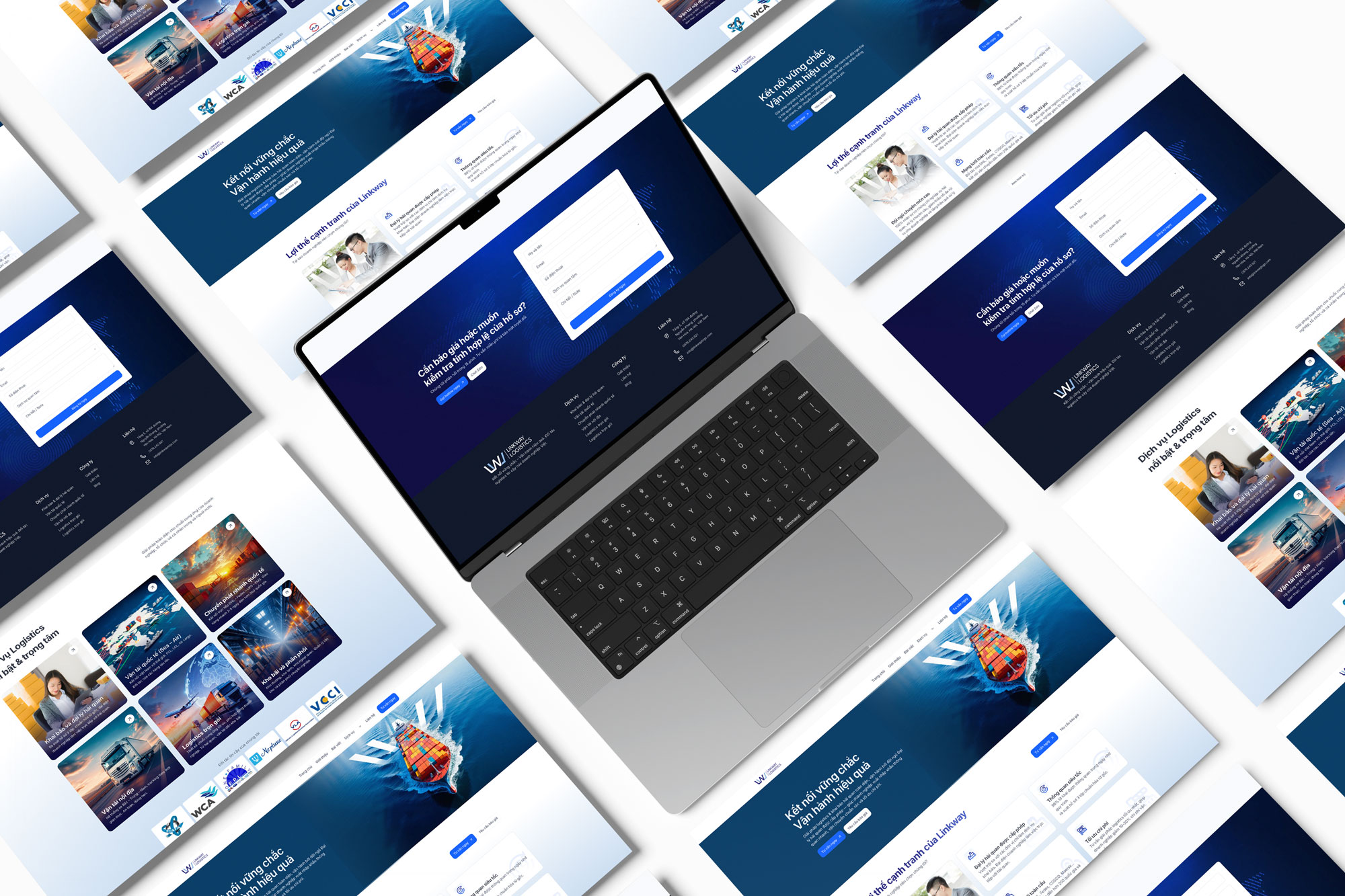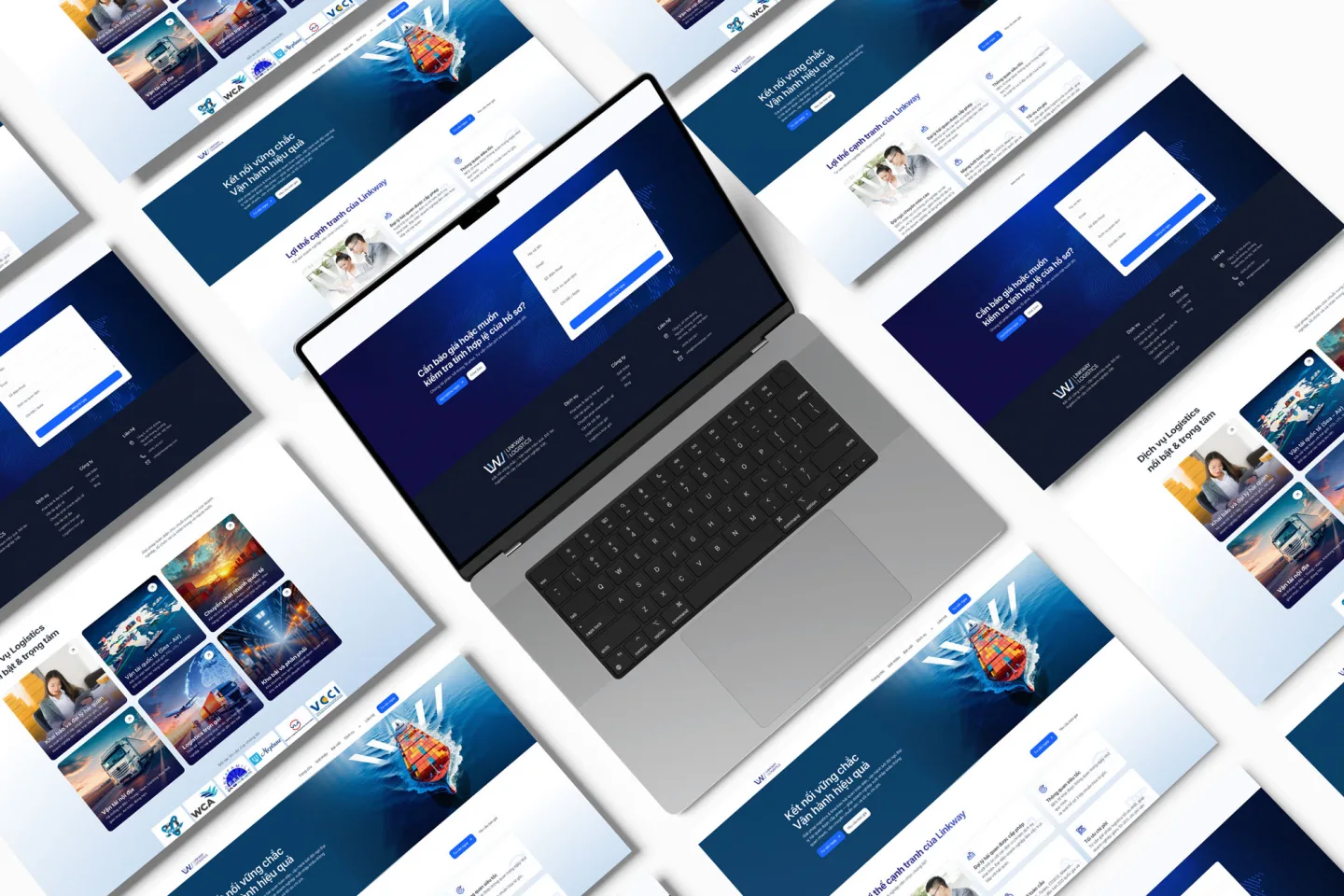
Linkway Logistics entered the market as a new player and needed to establish credibility quickly. At project start, the business had no clear website content direction and no practical structure for communicating broad service capabilities. We were engaged to build a trust-driven website that could explain services clearly and convert first-time visitors into qualified inquiries.
1. Problems
The company had a common early-stage gap: operational capability existed, but digital framing did not. Initial content was fragmented and lacked narrative flow from positioning to proof to contact action. This made it difficult for visitors to understand value quickly, especially in a B2B context where decisions are time-constrained.
Competitive benchmarking revealed another constraint typical in the logistics sector. Many competing websites relied heavily on generic stock imagery of containers, trucks, or ports, often without human presence. While visually acceptable, these images created a detached and impersonal impression that weakened trust signals and made services feel interchangeable.
Visual credibility was therefore a key challenge. Original media assets were limited, and the brand system had not yet matured into a consistent digital language. In logistics, generic visuals can reduce perceived professionalism before service details are even read.
Service communication also needed simplification. The offer portfolio was broad, but technical descriptions were not structured for scanning. Without a repeatable format, service pages risked becoming dense and difficult to compare.
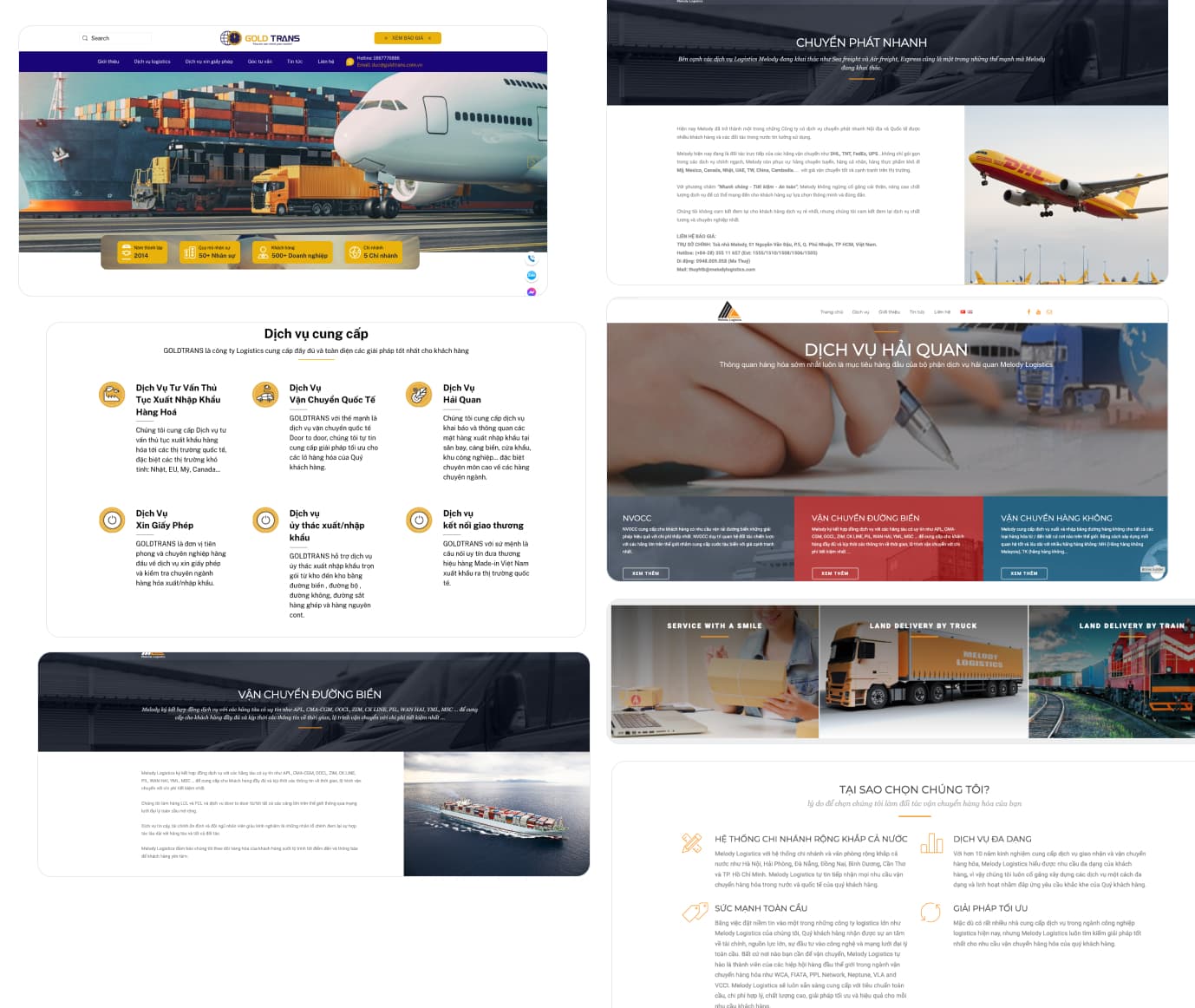
Many logistics websites still rely on outdated layouts and generic stock imagery, which weakens credibility and makes services feel interchangeable.
2. Approach
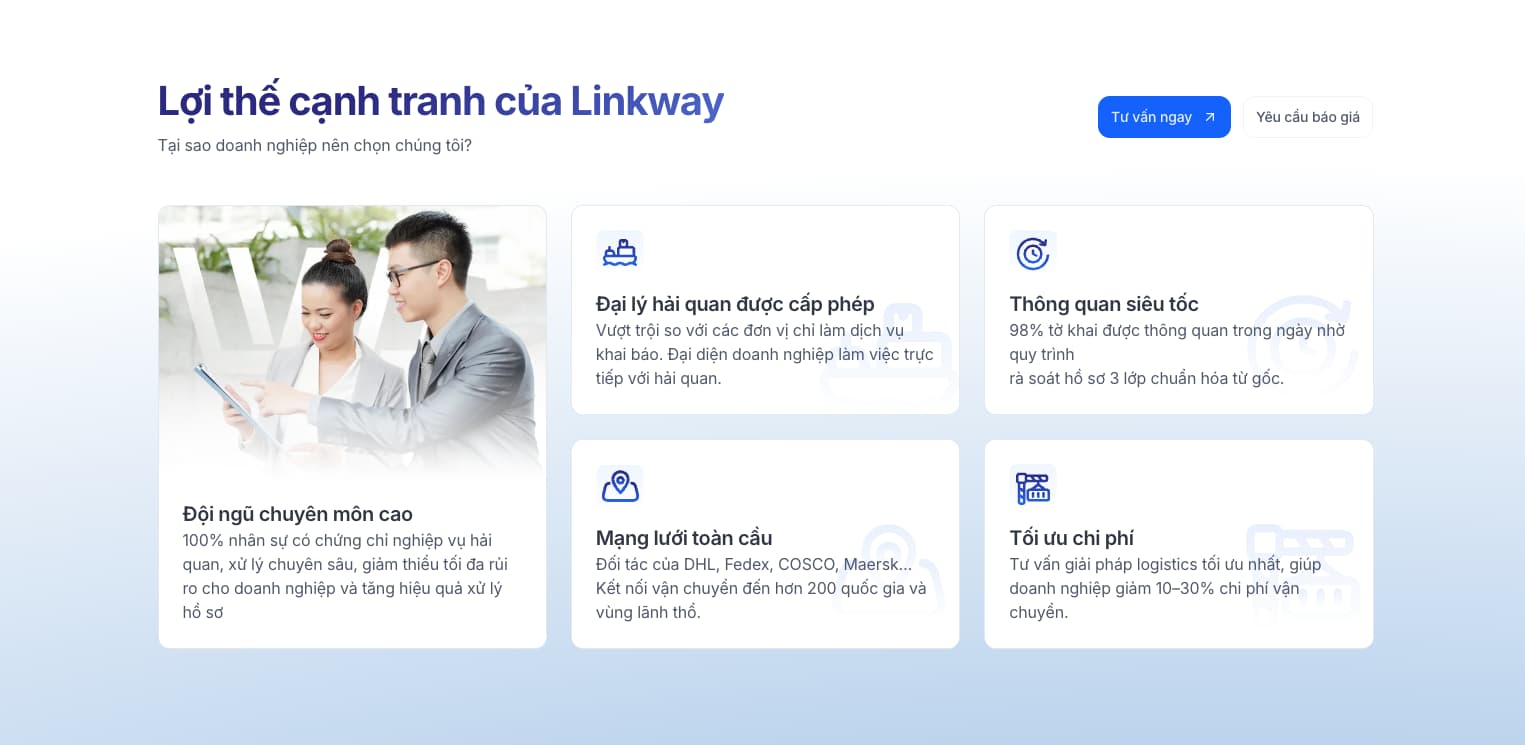
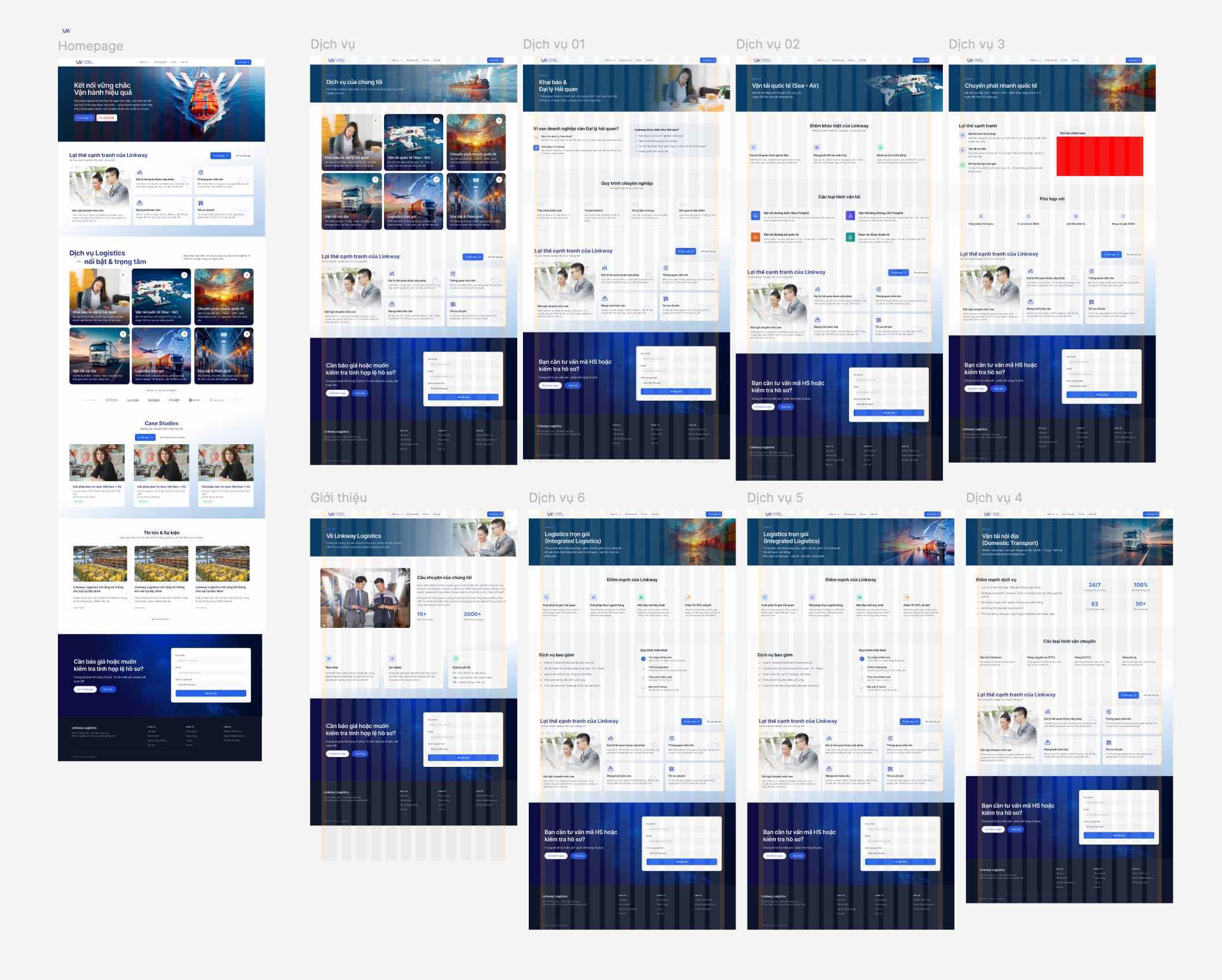
We rebuilt the website around a focused conversion narrative. The new architecture moved users through clear stages: brand positioning, service clarity, proof signals, and low-friction inquiry points. This reduced ambiguity and improved decision confidence for first-time visitors.
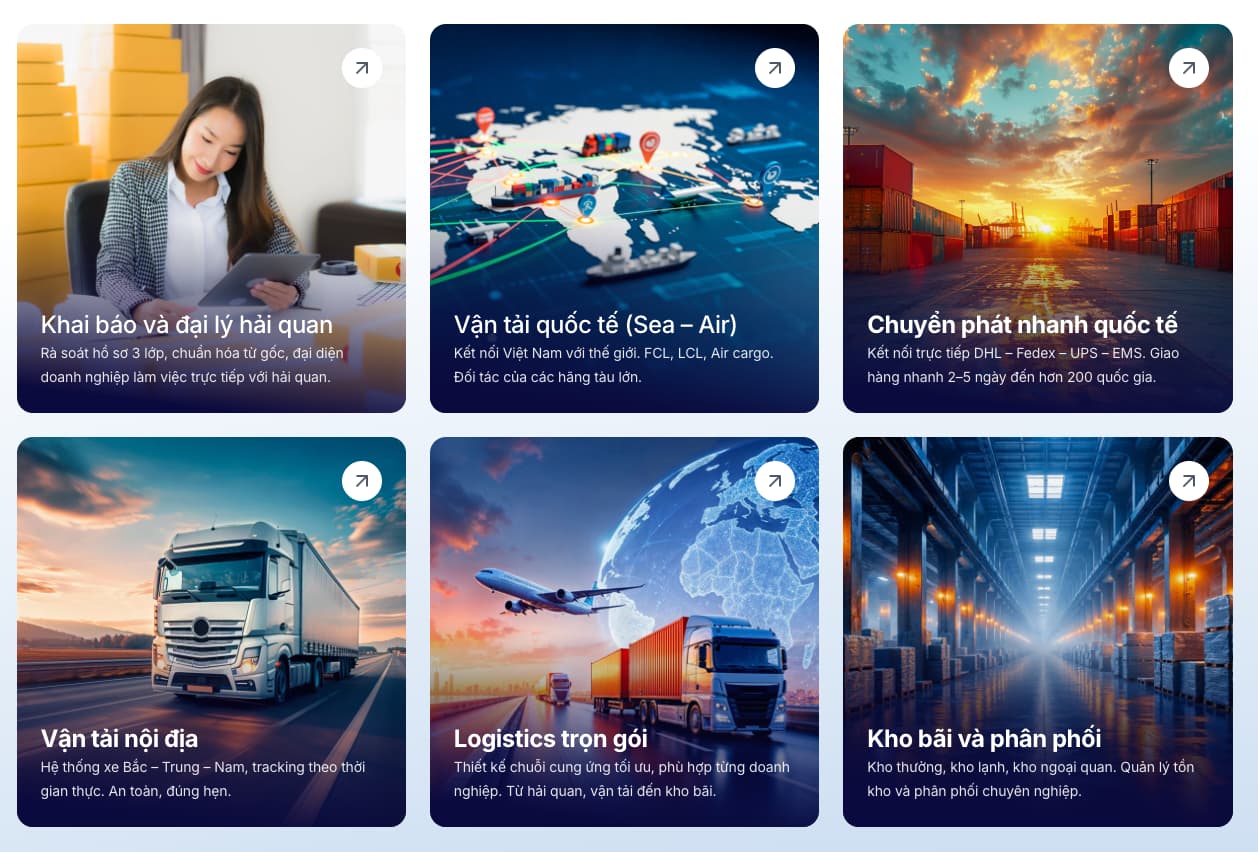
Visually, the strategy focused on restoring human credibility within the logistics environment. Instead of relying purely on container yards or vehicle imagery, the design introduced people into operational contexts. Carefully selected images were edited to convey the presence of real teams and working staff, creating a more authentic and approachable brand impression.
Brand elements were also integrated subtly into operational scenes. Logos and visual cues were composited into warehouse and yard imagery in a restrained way, suggesting real facilities without appearing staged. This helped maintain realism while reinforcing brand identity.
For service communication, we defined a compact page template repeated across core offerings. Each page follows a client-readable sequence: problem context, Linkway approach, practical value, and direct CTA. This preserved technical depth while reducing reading friction.
3. Implementation
The platform was built with WordPress + Bricks Builder and enhanced with GSAP for subtle motion cues. Animation patterns were intentionally restrained—fade, stagger, and controlled movement—to improve perceived quality without distracting from business content. This helped the site feel modern while remaining operationally focused.
Lead capture was engineered for speed and response reliability. We reduced the inquiry form to three high-intent fields and connected submissions directly to Google Sheets with real-time email notifications. This gave the team a faster handoff from inbound interest to follow-up action.
Content structure and visual production were implemented in parallel. As templates were finalized, we aligned each key section with approved messaging and image treatment so the final system could scale without reworking every page. This improved both launch speed and post-launch maintainability.
4. Outcome
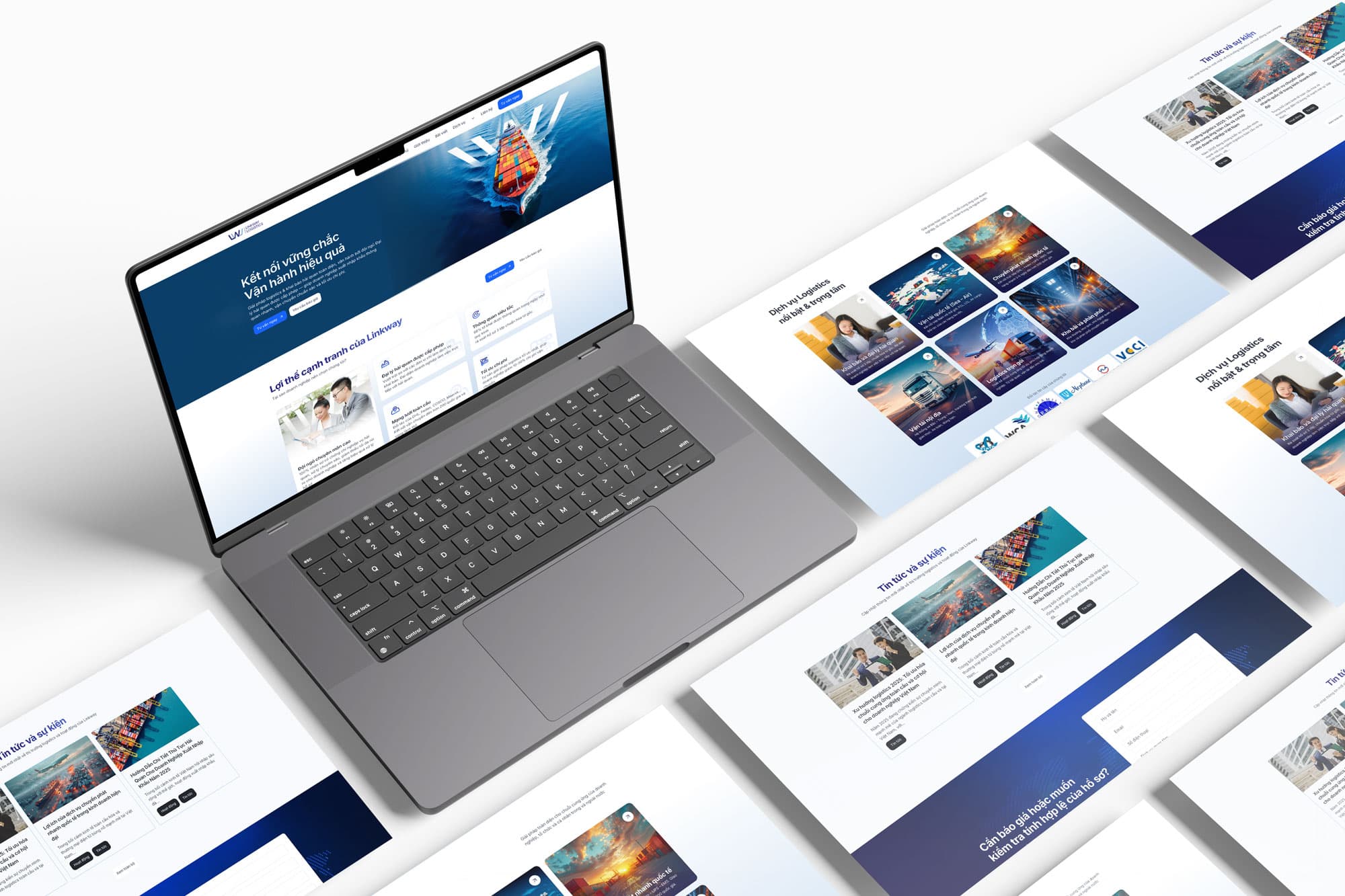
The redesigned website established a clearer first-impression framework for a new logistics brand. Visitors can now understand service scope, trust indicators, and next actions with less effort. Human-centered visuals and contextual branding also helped differentiate the site from many competitors that still rely on generic logistics imagery.
Operationally, lead handling became more responsive. Real-time form synchronization and notification routing reduced lag between submission and sales response. The business gained a practical conversion pipeline, not just a static brochure site.
The project also improved long-term content confidence. With structured templates and a consistent visual system, the team can extend service pages and campaign content without breaking brand coherence. This makes the website a stable growth asset rather than a one-off launch deliverable.
5. Client Impact
The primary impact was speed to trust. As a new brand, Linkway needed to look established before prospects reached out, and the new site now supports that requirement across core touchpoints. Messaging, visuals, and CTA placement work together as one system rather than separate design decisions.
The second impact was execution efficiency. The internal team now has a clearer content model and a more direct inquiry workflow, which improves consistency during campaigns and reduces operational overhead. This creates a stronger foundation for future scaling.
6. Handoff
Handoff started with production stabilization and editor governance. We delivered page templates with defined editable regions, standardized service-page modules, and publishing rules that allow safe updates without affecting layout integrity. Cache settings, media preparation standards, and section-level QA checks were included to protect speed and consistency during routine edits.
The operations package covered lead-flow continuity end to end. Documentation included Google Sheets mapping, email notification routing, field validation behavior, and troubleshooting for failed submission paths. The team also received procedures for campaign landing updates, CTA testing routines, and weekly conversion hygiene checks.
Access transfer and continuity controls were completed with full credential handoff, backup policy documentation, rollback instructions, and plugin/update maintenance cadence. A focused training session equipped the team to update service pages, manage inbound leads, and maintain site performance without day-to-day developer dependency.