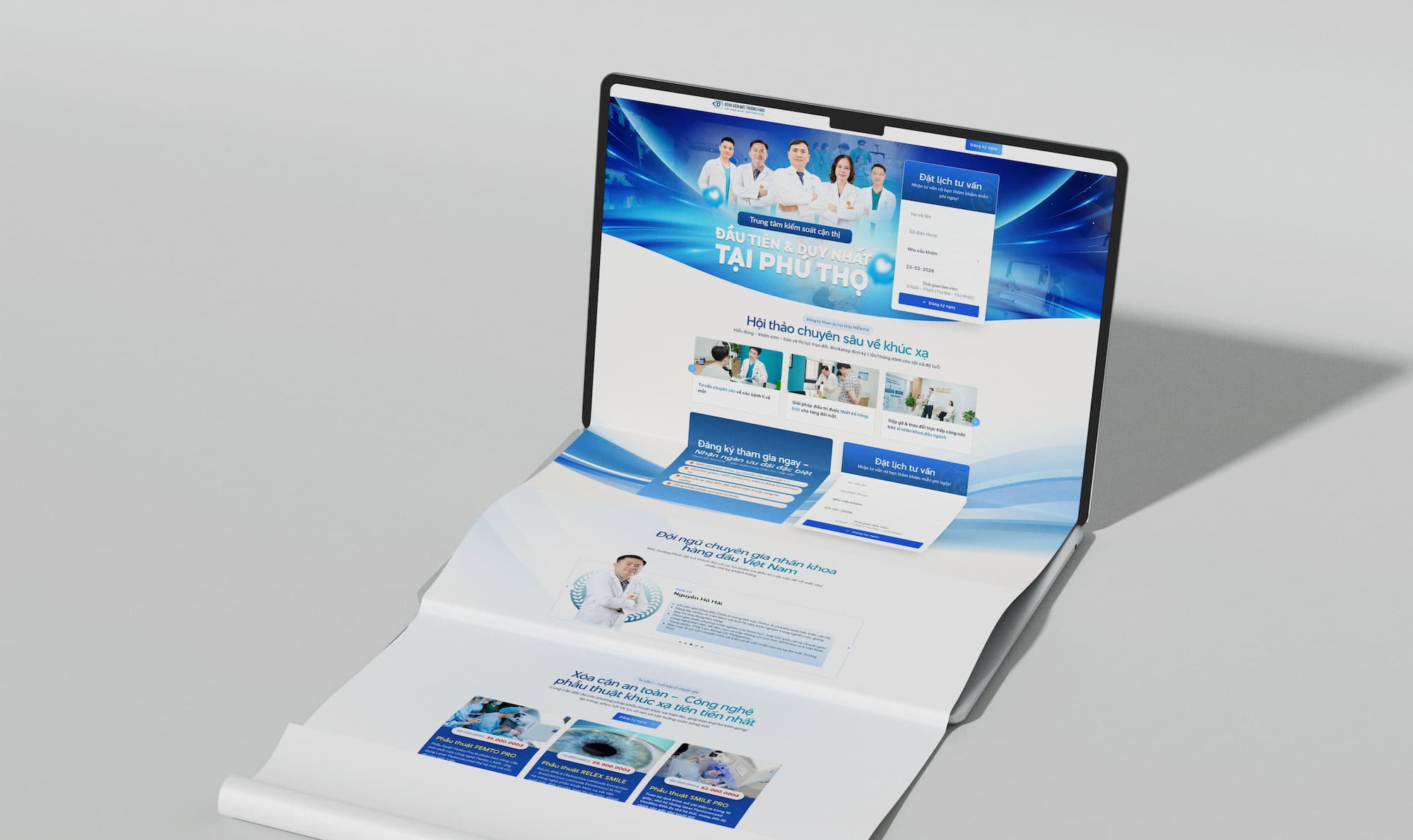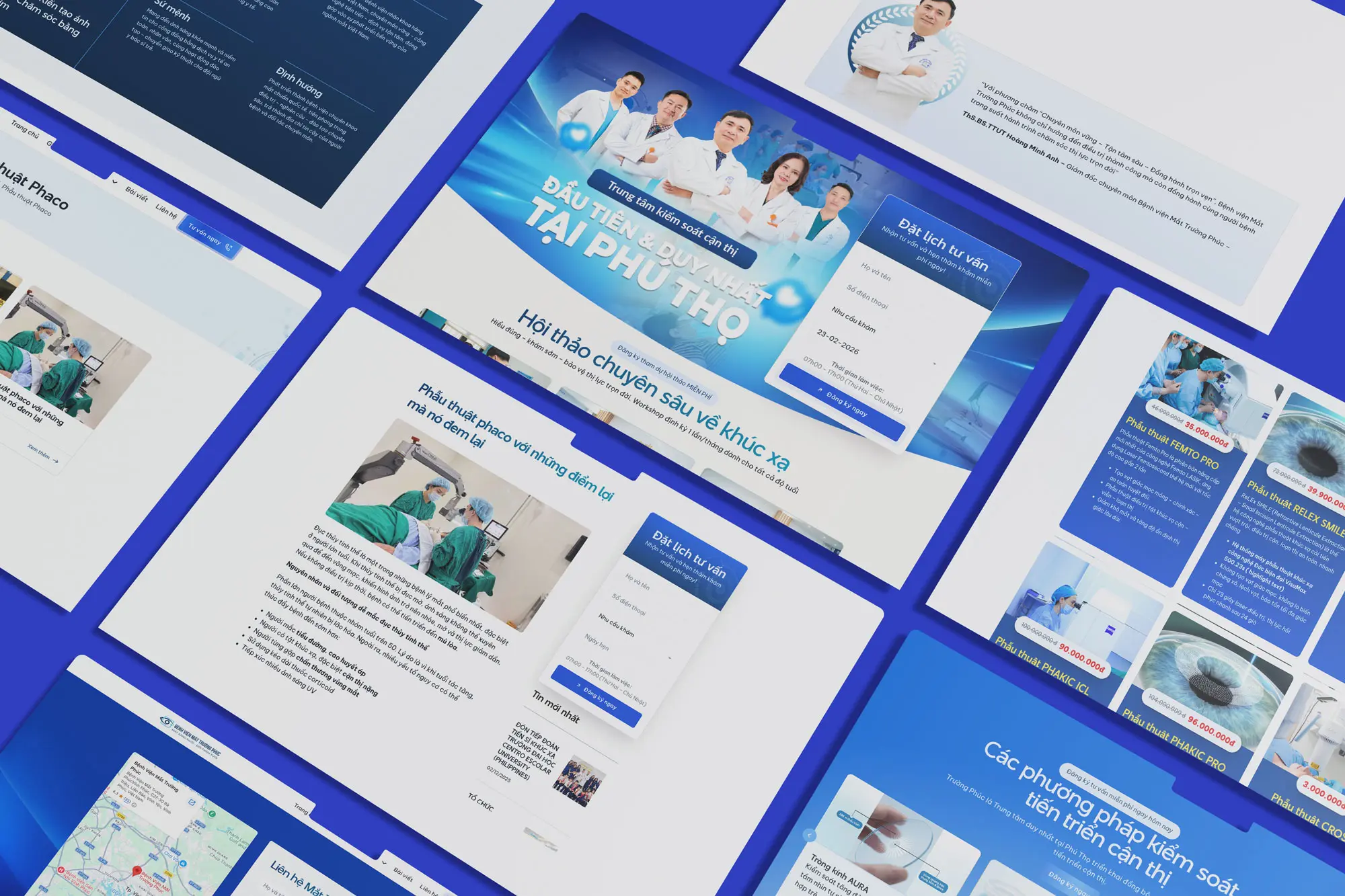
Most hospital websites in the industry still follow a traditional digital structure — dense, technical, and difficult for non-medical users to navigate. While they contain a large amount of information, the experience often feels rigid and overwhelming, making it harder for younger audiences to understand services or build trust quickly.
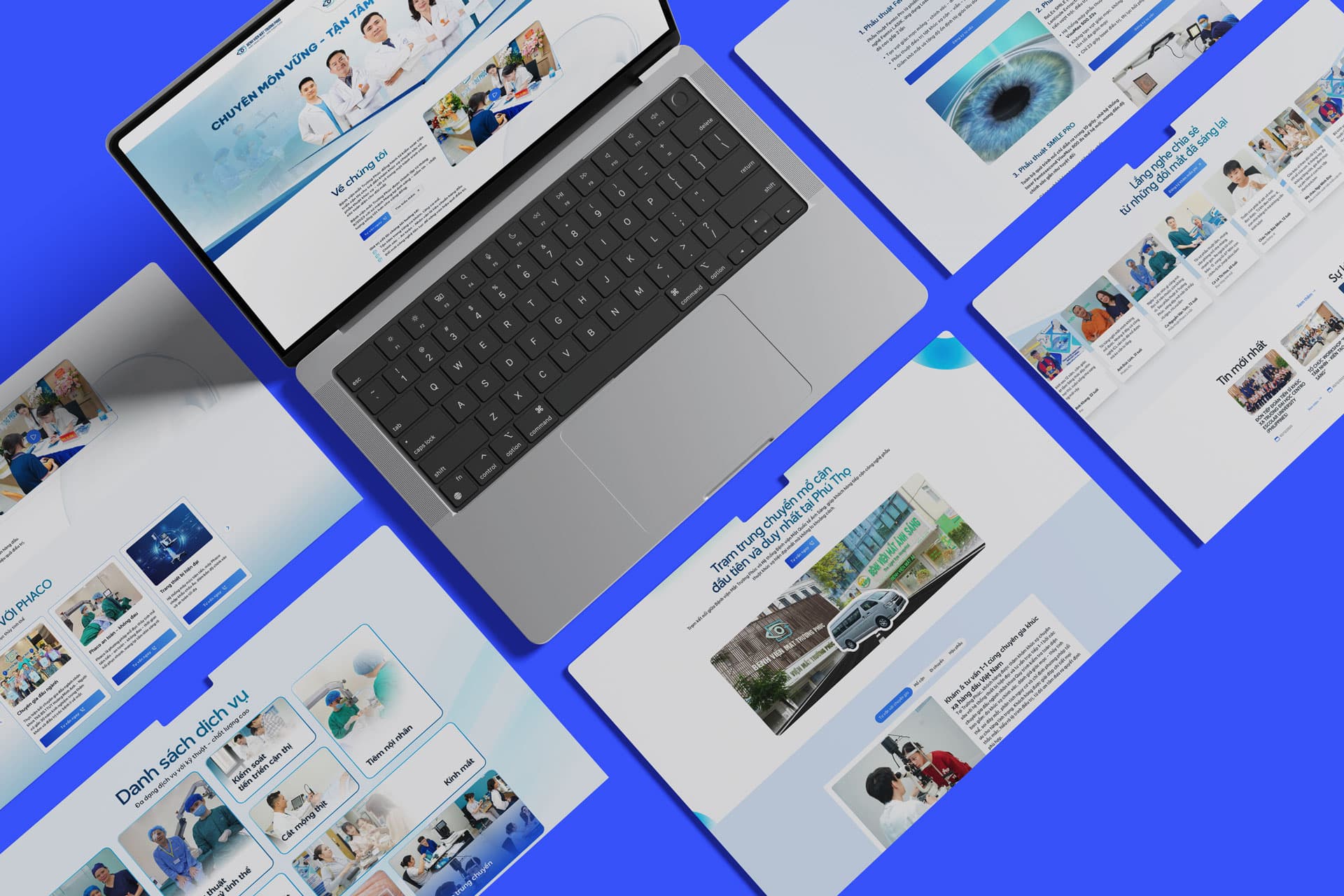
This project was not about remaking an old website, but about creating a new digital standard that reflects how modern patients search and evaluate healthcare online.
In many cases, medical credibility exists strongly offline, yet the digital experience fails to communicate that trust clearly. Service explanations often begin with technical terminology instead of patient context, creating confusion at the moment users need reassurance most.
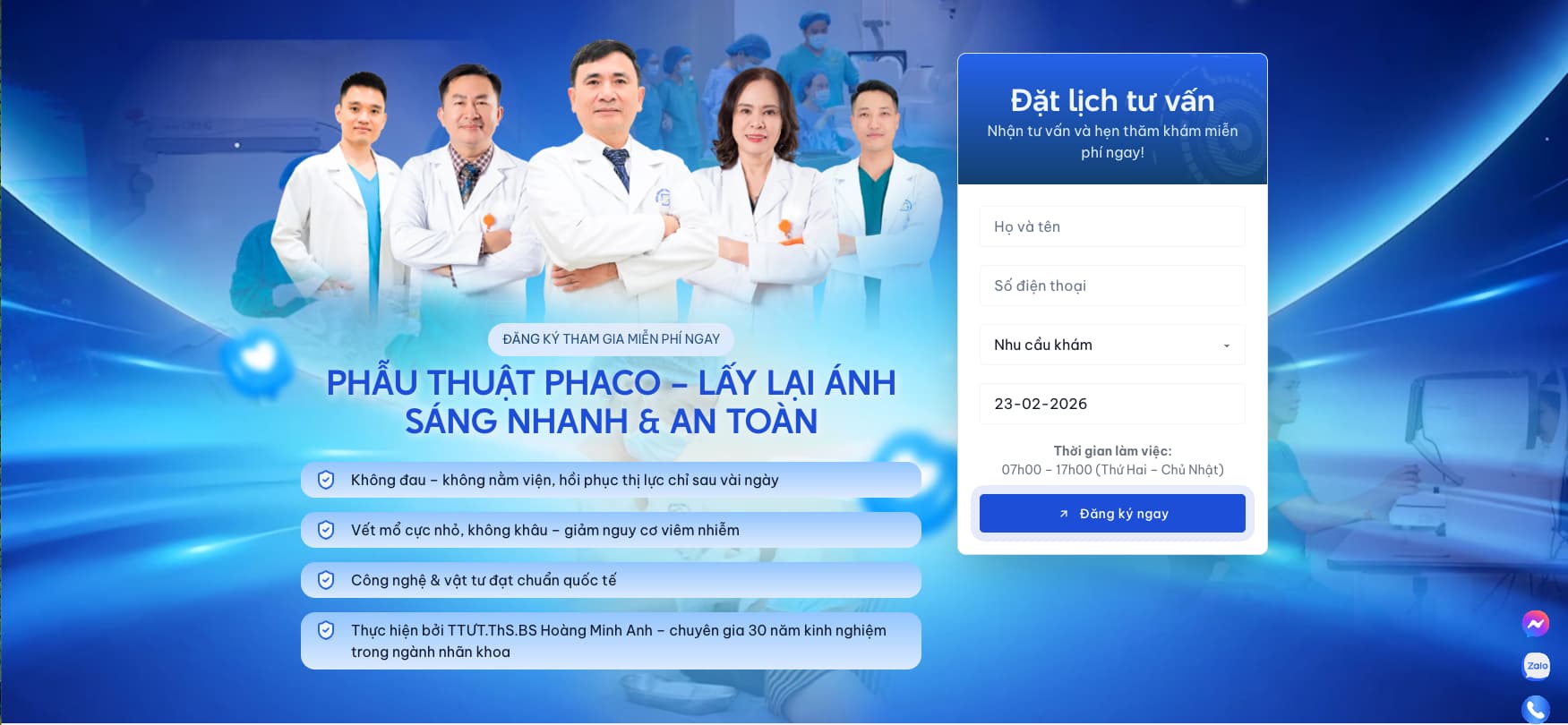
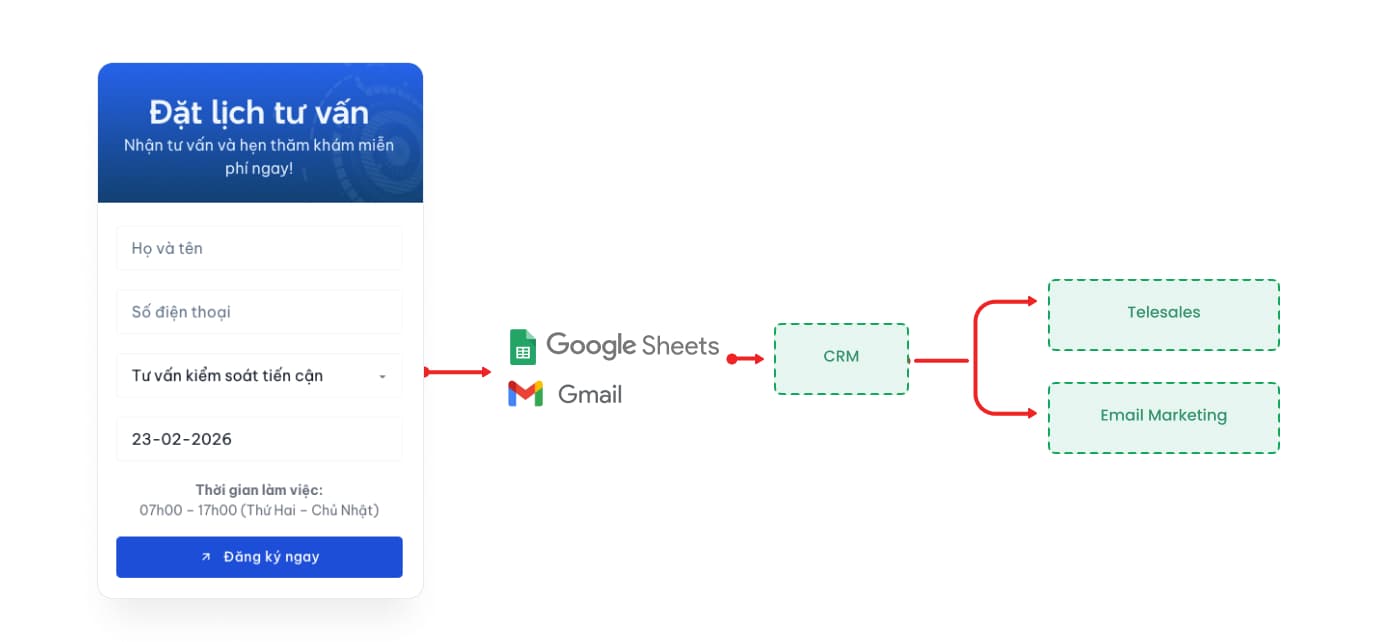
Conversion infrastructure was another limitation. Appointment flows and landing environments were not designed for high-intent traffic, and mobile users often encountered unnecessary friction. In healthcare, where trust and clarity are critical, even small obstacles can significantly reduce lead completion.
Performance also played a role. Heavy media and shared hosting conditions created slow response times, weakening first impressions and increasing bounce risk. For medical services, where trust forms within seconds, this technical lag can directly impact business outcomes